The area surrounding the San Ysidro Port of Entry is one of the most congested and unpredictable pedestrian environments in San Diego County. Thousands of vehicles and pedestrians converge daily in a zone where traffic lanes shift, drivers make last-minute maneuvers, and foot traffic crosses vehicle paths with minimal separation.
A San Ysidro pedestrian accident lawyer helps injured pedestrians navigate the unique liability and insurance challenges that these border-area collisions create.
Pedestrian accidents near the border crossing involve challenges that don’t come up in a typical intersection collision. The driver may carry a foreign insurance policy or no insurance at all. Jurisdiction questions may surface depending on exactly where the accident occurred.
Traffic conditions in the area contribute to driver behavior that is more erratic and less predictable than on a typical San Diego road. These factors make the claims process more complex, but they do not eliminate a pedestrian's right to pursue compensation under California law.
Schedule A Free Case Evaluation Today!
Key Takeaways for San Ysidro Pedestrian Accident Claims
- Pedestrian accidents near the San Ysidro Port of Entry often involve congestion-related driver errors, including sudden lane changes, distracted driving, and failure to yield in high-foot-traffic zones.
- Claims against uninsured or foreign-insured drivers may require the injured pedestrian to rely on their own uninsured or underinsured motorist (UM/UIM) coverage for recovery.
- California's duty-of-care standards apply to all drivers in the border zone, regardless of where the driver is from or how congested the area is.
- The statute of limitations for personal injury claims in California is two years under CCP § 335.1, with a six-month government tort claim deadline if a public entity's road design contributed to the collision.
- Comparative negligence applies in border-area pedestrian accidents, meaning a pedestrian found partially at fault may still recover compensation, reduced by their percentage of responsibility.
What Makes the San Ysidro Border Zone So Dangerous for Pedestrians?

The San Ysidro Port of Entry processes more northbound and southbound crossings than any land border crossing in the Western Hemisphere, according to the U.S. General Services Administration. That volume of traffic creates an environment where vehicles and pedestrians share space under conditions that test every driver's attention.
Congestion and Erratic Driver Behavior
Vehicles approaching the border crossing from Interstate 5 and local access roads frequently slow to a crawl, then accelerate unpredictably as lanes open or merge. Drivers rushing to reach a crossing lane make sudden stops, cut across traffic, and change direction with little warning.
Pedestrians walking along access roads, through parking areas, or between transit stops navigate this vehicle traffic at close range.
The congestion does not relieve drivers of their legal obligations. California Vehicle Code § 21950 requires drivers to yield to pedestrians in marked and unmarked crosswalks. That duty applies in heavy traffic just as it does on a quiet residential street.
Pedestrian Traffic Patterns Near the Port of Entry
Foot traffic near the border is heavy and continuous. Pedestrians cross between the San Ysidro Transit Center, commercial areas, parking facilities, and the pedestrian entry to the port itself.
Many of these routes require crossing vehicle lanes that lack adequate pedestrian infrastructure. The result is a constant flow of people moving through spaces designed primarily for vehicles.
Challenges Unique to San Ysidro Pedestrian Accident Claims
Border-area pedestrian collisions introduce layers of complexity that straightforward accident claims do not involve. Understanding these challenges helps set realistic expectations for how the claims process may unfold.
| Issue | Why It Matters |
| Heavy congestion near the crossing | Increases the frequency and unpredictability of driver errors |
| Foreign or uninsured drivers | Complicates identifying and accessing insurance coverage |
| Jurisdiction questions | May affect how and where claims are filed |
| Multiple potentially liable parties | Driver, city, transit authority, or property owner may share responsibility |
| Border traffic patterns | Contribute to erratic driving behavior and reduced pedestrian visibility |
Each row represents a factor that a San Ysidro pedestrian accident lawyer evaluates when building a claim. Most border-area cases involve more than one of these complications simultaneously.
Insurance Complications in Border-Area Pedestrian Accidents
The insurance landscape near the San Ysidro Port of Entry is more complicated than in other parts of San Diego. Driver insurance status varies widely, and the path to compensation often runs through unexpected channels.
Uninsured and Foreign-Insured Drivers
A driver crossing from Mexico may carry a Mexican auto insurance policy that does not extend coverage to accidents on the U.S. side of the border. Some drivers carry no insurance at all. When the at-fault driver lacks valid California coverage, the injured pedestrian's own UM/UIM policy often becomes the primary recovery path.
Many people do not realize that their personal auto insurance may apply even when they are injured as a pedestrian, not as a driver. Identifying all available coverage early is one of the most important steps in a border-area pedestrian claim.
Why UM/UIM Coverage Matters Here
Uninsured and underinsured motorist coverage exists for exactly this type of situation. When the at-fault driver has no policy, an inadequate policy, or a policy that does not apply in California, the pedestrian's own UM/UIM coverage may fill the gap.
Filing a claim against your own insurer involves a different process than negotiating with the other driver's carrier, and having legal representation during that process helps protect the claim's value.
Who May Be Liable in a San Ysidro Pedestrian Accident?

Liability near the border crossing may extend beyond the driver. The physical environment, traffic design, and multiple entities involved in managing the area all create potential sources of responsibility.
Driver Negligence in High-Congestion Zones
A driver who fails to yield, changes lanes abruptly, or accelerates through a pedestrian zone near the port of entry may bear primary liability. Being hit by a car near the border does not change the legal standard for driver negligence. California law holds drivers to the same duty of care in congested border traffic as it does on any other road.
Government Liability for Road Design
The roads and pedestrian infrastructure surrounding the San Ysidro Port of Entry are maintained by a combination of federal, state, and local agencies. If a poorly designed pedestrian crossing, inadequate signage, or missing crosswalk contributed to the accident, the responsible government entity may share liability.
Government liability claims must be filed within six months under California Government Code § 911.2. Claims involving federal property follow a separate process under the Federal Tort Claims Act. Identifying which agency maintains the specific stretch of road where the accident occurred is an essential early step.
Third-Party Liability
Property owners operating parking lots, commercial spaces, or transit facilities near the border may bear responsibility if unsafe conditions on their property contributed to a pedestrian collision. Poorly lit parking areas, obstructed sightlines, or vehicle flow patterns that route traffic through pedestrian zones may all support a third-party claim.
Schedule A Free Case Evaluation Today!
How Comparative Negligence Applies in Border-Zone Accidents
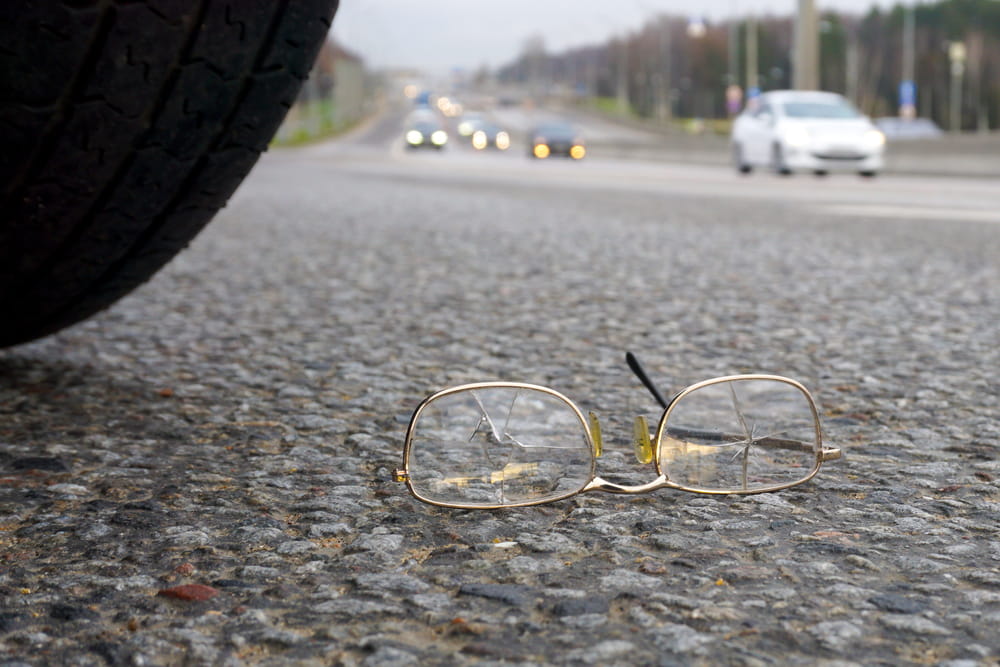
California's comparative negligence system evaluates every party's conduct and assigns fault proportionally. This framework applies to border-area pedestrian accidents the same way it applies anywhere else in the state.
What Shared Fault Looks Like Near the Border
A pedestrian who crossed outside a marked crosswalk or moved between stopped vehicles in a border traffic queue may be assigned a percentage of fault. That percentage reduces the recovery but does not eliminate it. For example, a pedestrian found 30 percent responsible may still recover 70 percent of total damages from the at-fault parties.
Why the Driver's Conduct Still Drives the Analysis
Congestion, impatience, and familiarity with chaotic border traffic do not lower the bar for driver responsibility. A driver who was speeding through a pedestrian zone, distracted by a phone, or cutting across lanes without checking for foot traffic may bear the majority of fault regardless of the pedestrian's actions.
The analysis evaluates what each party did and failed to do, and assigns responsibility based on the full picture.
Regional Traffic Patterns and Overflow Congestion
The effects of border traffic extend well beyond the immediate port of entry area. Surrounding communities absorb overflow congestion that raises pedestrian risk along corridors that connect to the crossing.
Border Crossing Accident Patterns in Chula Vista
Traffic backing up from the San Ysidro crossing sometimes spills onto I-5 and surface streets through Chula Vista. Pedestrians along these overflow routes face drivers who are frustrated, distracted, and operating in stop-and-go conditions that are not typical for those roads.
A border crossing accident in Chula Vista may involve the same congestion-driven driver behavior seen closer to the port of entry. These surrounding areas often experience similar pedestrian safety risks due to overflow traffic patterns. Guidance from a Chula Vista pedestrian accident lawyer may help clarify how these cases are evaluated.
Tourist and Cross-Border Driver Risks
Drivers crossing into the U.S. for the first time, or infrequently, may be unfamiliar with California traffic laws, road markings, and right-of-way conventions. A tourist pedestrian accident in San Diego involving a cross-border driver adds another layer of complexity to the liability analysis.
Unfamiliarity with the road does not reduce a driver's legal obligations, but it may affect behavior in ways that increase risk to pedestrians.
What Evidence Strengthens a San Ysidro Pedestrian Accident Claim?
The border zone's dense infrastructure and high traffic volume often generate more evidence than a typical accident scene. Preserving that evidence quickly is critical.
Documentation that supports a border-area pedestrian claim includes:
- Surveillance footage from nearby businesses, parking facilities, transit stations, or border infrastructure cameras
- The police report, which may document traffic conditions, driver identification, and insurance information
- Photographs of the accident scene showing road conditions, crosswalk placement, signage, and traffic flow patterns
- Witness statements from other pedestrians, nearby vendors, or transit employees who observed the collision
- Insurance policy documents, including the injured pedestrian's own UM/UIM coverage, which may be relevant if the at-fault driver lacks California coverage
The volume of traffic and surveillance infrastructure near the border crossing means evidence often exists. Requesting it before footage is overwritten or records are lost protects the factual foundation of the claim.
Mistakes That Weaken a Border-Area Pedestrian Claim
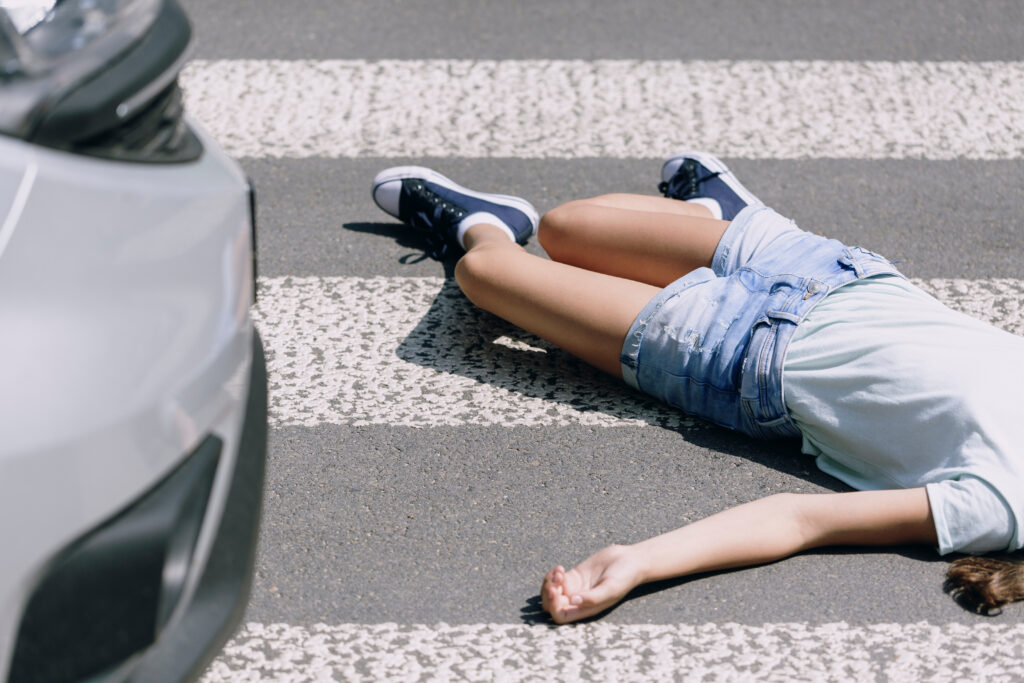
Certain missteps after an accident near the San Ysidro crossing may create problems that are difficult to reverse.
Actions that may reduce the strength of a claim include:
- Failing to obtain the at-fault driver's information, including license plate, insurance details, and identification, which is especially important when the driver may leave the country
- Delaying medical treatment, which gives adjusters room to argue the injuries were minor or unrelated
- Providing a recorded statement to an insurer before understanding the full scope of injuries and available coverage
- Assuming a claim is not viable because the driver was uninsured or carried a foreign policy
Each of these gaps makes the claim harder to build. Acting on the assumption that border-area complexity eliminates legal options is itself one of the biggest risks to a viable case.
FAQs for San Ysidro Pedestrian Accident Claims
What if the driver who hit me crossed back into Mexico after the accident?
Identifying and locating the driver is more difficult in this scenario, but a claim may still proceed. Your own UM/UIM coverage may apply. If the driver's identity and plate number were recorded, cross-border legal processes may also be available depending on the circumstances.
Does the proximity to federal property affect my claim?
It may. If the accident occurred on federally maintained property near the port of entry, the Federal Tort Claims Act may govern the claim rather than standard California procedures. Identifying the exact location and the entity responsible for maintaining that area is an important early step.
What if I was a tourist visiting San Diego when the accident happened?
Visitors injured in California may file claims under California law regardless of where they live. The same statutes of limitations and liability standards apply. Being from out of state or out of the country does not reduce a pedestrian's legal protections.
What happens if the at-fault driver had a Mexican insurance policy?
Mexican auto insurance policies generally do not cover accidents that occur in the United States. The injured pedestrian may need to rely on their own UM/UIM coverage or explore other avenues depending on the specific policy terms and the driver's assets.
How do I know if the city or a federal agency is responsible for the road where I was injured?
Road maintenance responsibilities near the border are divided among federal, state, and local agencies. A San Ysidro pedestrian accident lawyer investigates which entity maintained the specific location where the accident occurred. This determination affects the filing process, the applicable deadlines, and the procedural requirements.
Border Traffic Is Complicated, but Your Legal Options Are Not Out of Reach
The area around the San Ysidro Port of Entry creates conditions that make pedestrian accidents more likely and claims more complex.
Insurance gaps, jurisdictional questions, and the sheer volume of vehicles and people moving through a small area add layers that a standard claim does not involve. None of those layers eliminate the right to pursue compensation under California law.
At Rawlins Law Accident & Injury Attorneys, we help pedestrians injured near the border crossing understand their options and move forward with clarity. Consultations are free, and you pay nothing unless we recover compensation on your behalf.
Contact our team to talk through your situation and find out where your claim stands.
Schedule A Free Case Evaluation Today!

Ashley Rae Rawlins
Founder and CEO - Car Crash Ash Accident Lawyer, APC
Personal Injury Attorney
Author's Bio