Pure comparative negligence in California accident claims means you may still be able to recover damages, even if you were partially at fault for the collision.
This legal principle means that being assigned a percentage of blame does not prevent you from pursuing compensation. However, your final award will be reduced by your degree of fault.
At Rawlins Law Accident & Injury Attorneys Accident & Injury Attorneys, we understand how insurance companies use allegations of shared fault to reduce or deny claims.
Our Oceanside car accident lawyers are here to protect your rights, challenge unfair fault apportionment, and build a strong case to pursue the compensation you may be entitled to under California law.
Are you struggling to prove that an auto accident wasn't your fault? Contact Car Crash Ash and the team at Rawlins Law Accident & Injury Attorneys to explore your legal rights and options during a free case evaluation.
Schedule A Free Case Evaluation Today!
Key Takeaways About Why Legal Representation Matters in Shared Fault Accident Claims
- A lawyer defends against unfair blame. Insurance adjusters often try to shift as much fault as possible onto an injured party to minimize their payout. Legal professionals counter these tactics by using evidence to demonstrate the other party’s greater responsibility for the crash.
- Attorneys handle the complexities of California’s pure comparative fault rule. This rule, established in the case of Li v. Yellow Cab Co., allows for recovery even if you are 99% at fault. A lawyer works to minimize your assigned percentage of fault to maximize your potential compensation.
- Legal professionals use evidence to prove the other driver’s negligence. Even in a shared fault accident, a successful claim depends on proving the other party violated a duty of care, such as by speeding through a busy Oceanside intersection or making an unsafe lane change on the I-5.
- A lawyer calculates and fights for all available damages. Beyond medical bills, you may be able to recover compensation for lost wages, pain and suffering, and future care. An attorney ensures these damages are properly valued and pursued, even when fault is shared.
How Pure Comparative Negligence Works in California Car Crashes
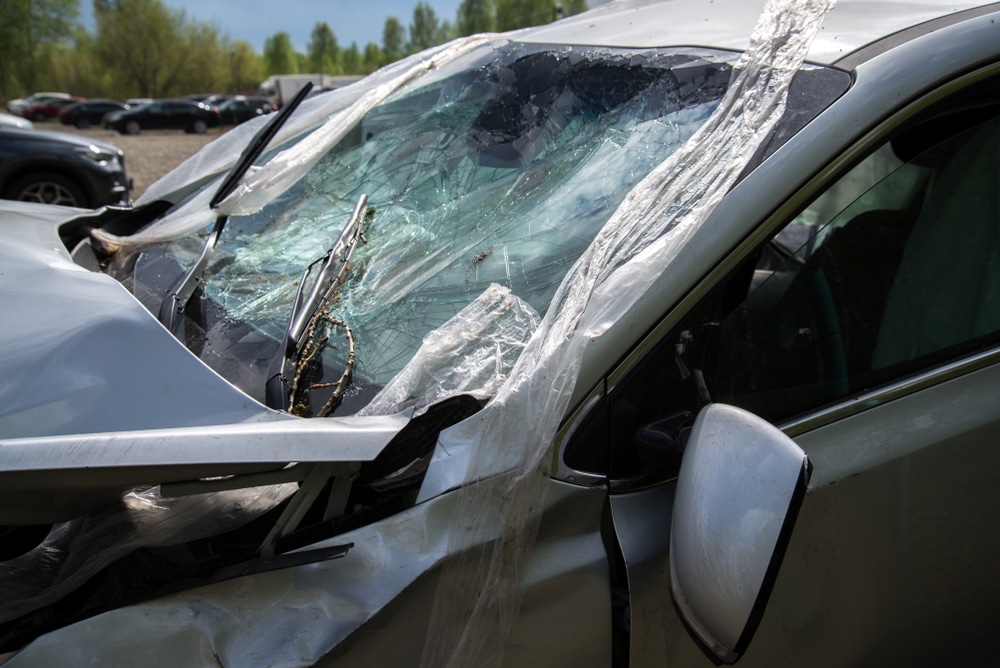
Many people assume that if they contributed to an accident in any way, they forfeit their right to compensation. In some states, that is true.
Those states follow contributory or modified comparative negligence rules, which can bar recovery if you are found to be even 1% or more than 50% at fault, respectively.
California, however, uses a more forgiving system: pure comparative negligence.
Under this rule, fault is assigned to each party as a percentage. You can pursue damages from the other at-fault party. However, any compensation recovered may be reduced by your own percentage of fault.
For example, if you were in an intersection crash in San Diego and incurred $100,000 in damages, but a jury determines you were 20% at fault for the accident, fault in a California car accident does not automatically bar recovery, and you could still recover $80,000 from the other driver.
Even if you were found to be 90% at fault, you could theoretically recover 10% of your damages. Ultimately, this system recognizes that accidents are rarely black and white and that multiple parties can share responsibility.
How Insurance Companies Use Shared Fault Against You
While California’s law is favorable to injured victims, insurance companies are skilled at using it to their advantage.
The claims adjuster’s primary goal is to protect the company’s bottom line, which means paying out as little as possible. One of the most effective ways to do this is by shifting blame.
An adjuster might review the police report, take your recorded statement out of context, or misinterpret evidence to argue that you were more at fault than you actually were.
They might claim you were speeding, distracted, or failed to take evasive action, even if the other driver ran a red light. Every percentage point of fault they can assign to you directly reduces the amount they have to pay.
This is where having a car accident lawyer becomes a significant advantage. A legal professional can manage all communication with the insurance company, especially when questions arise about being uninjured after a car accident, preventing you from making statements that could be twisted and used against you.
They can also launch an independent investigation to gather evidence that presents a more accurate picture of how the accident happened.
Proving Fault in a Shared Liability Accident
How do you show that the other driver’s actions played a bigger role in causing the car crash?
Was the other driver speeding through an intersection, ignoring the flow of traffic?
Did they fail to check their blind spot before merging or make a sudden, unsafe turn?
These are the kinds of questions that can determine who holds more responsibility in a shared fault accident.
Proving this isn’t always straightforward, especially when insurance companies are quick to point fingers.
A lawyer can help uncover the details that matter most, asking probing legal questions such as:
- Did dashcam footage capture the other driver running a red light or swerving between lanes?
- Did witnesses at the scene notice the other driver texting or driving aggressively?
- Could accident reconstruction experts analyze skid marks or vehicle damage to show how the crash unfolded?
By asking the right questions and gathering the right evidence, especially in situations involving accidents involving car driver fatigue, a lawyer can build a case that highlights the other driver’s role in the accident.
This approach not only challenges unfair blame but also strengthens your claim for the compensation you may be entitled to under the law.
Common Scenarios Involving Shared Fault in Oceanside and San Diego Car Accident Injury Claims
Comparative negligence often arises in certain types of accidents where liability isn’t immediately clear.
These scenarios are common on busy roads and intersections throughout Oceanside and San Diego:
- Intersection accidents. A driver may run a yellow light at a busy Oceanside intersection, while another makes a left turn without yielding. Both drivers could share some degree of fault.
- Lane change collisions. On highways like the I-5 or CA-78, a driver might merge without checking their blind spot, while another driver is speeding in the adjacent lane.
- Rear-end collisions with a twist. While the rear driver is typically at fault, situations such as sudden braking for no reason or broken taillights, which are common on congested San Diego freeways, can lead to shared liability.
- Pedestrian or bicycle accidents. A driver may fail to yield at a crosswalk near Oceanside’s downtown area, but the pedestrian or cyclist could also share fault if they were crossing outside of a marked crosswalk.
In each of these situations, insurance companies often try to shift blame onto the injured party to reduce their payout.
A lawyer’s role is to gather evidence, such as witness statements or traffic camera footage, especially in cases where you are partially at fault in a car crash, to support your side of the story and minimize any fault attributed to you.
What to Do After an Accident to Protect Your Claim for Maximum Compensation
The actions you take after a car crash can significantly impact a shared fault claim for compensation. These steps help preserve evidence and support your lawyer’s efforts to build a strong case:
- Report the accident immediately. Call 911 to have police respond to the scene. The official police report is a key piece of evidence, even if you disagree with its conclusions.
- Document the scene thoroughly. Use your phone to take photos of all vehicle damage, skid marks, road debris, traffic signals, and your visible injuries.
- Get contact information from witnesses. Independent witnesses can provide an unbiased account of what happened, which can be invaluable in resolving a dispute over fault.
- Seek prompt medical attention. Adrenaline can hide serious injuries. A medical evaluation creates an official record linking your injuries to the crash.
- Be cautious when speaking to anyone. Avoid admitting fault or even apologizing at the scene. When speaking to an insurance adjuster, do not give a recorded statement without first consulting a lawyer.
- Forward all communications to your attorney. Once you have legal representation, direct all calls and letters from insurance companies to your lawyer. This prevents you from making any missteps that could harm your claim.
If you have already given a statement or believe the police report unfairly blames you, do not lose hope. An experienced attorney can still work to challenge inaccurate information and fight for your rights.
Schedule A Free Case Evaluation Today!
How a Lawyer Can Reduce Your Assigned Fault

A lawyer doesn't just accept the insurance company’s version of events. They actively work to reduce your percentage of fault through several strategies:
- Challenging the police report: A police report is an officer’s opinion, not the final word on liability. An attorney can highlight inconsistencies or introduce new evidence to contest the findings.
- Utilizing accident reconstructionists: In complex cases, these professionals can recreate the accident to provide a scientific basis for fault apportionment.
- Identifying "Negligence Per Se": If the other driver violates a specific law, such as a California Vehicle Code statute on speeding or making an illegal turn, they can be considered negligent as a matter of law. This can significantly shift the balance of fault.
- Negotiating with the adjuster: Armed with strong evidence, a lawyer can negotiate assertively with the insurance company to argue for a lower fault percentage for their client.
Minimizing your assigned fault is one of the most direct ways a lawyer can maximize the compensation you ultimately receive, including recovery for lost wages after a car accident.
Oceanside Shared Fault Claims FAQ
What if I'm blamed for the accident in the police report?
A police report is not legally binding when it comes to fault. An attorney can investigate the accident, gather new evidence, and challenge the report’s conclusions to build a case that accurately reflects what happened.
Can I still get compensation if I wasn't wearing a seatbelt?
Your compensation for injuries may be reduced. The defense might argue that your failure to wear a seatbelt contributed to the severity of your injuries. A lawyer can work to minimize the impact of this argument on your claim.
How is fault determined if multiple drivers were involved?
In a multi-car pileup, fault can be distributed among several drivers. An investigation will look at the actions of each driver to determine who contributed to the chain reaction. A lawyer protects you from being unfairly blamed for the actions of others.
Does accepting a partial fault settlement affect my insurance rates?
Anytime your insurance company has to pay out on a claim where you are deemed partially at fault, it can potentially impact your premiums. However, the financial benefit of recovering damages for your injuries often outweighs this concern.
Is it worth pursuing a claim if I know I was partially at fault?
Absolutely. Because California follows a pure comparative negligence system, you can still recover a portion of your damages. Do not let an admission of partial fault stop you from exploring your legal options with an attorney.
You Have Rights Even When Fault is Shared. Contact Car Crash Ash and the Legal Team at Rawlins Law Accident & Injury Attorneys For a Free Case Evaluation
Being partially at fault for an accident should not prevent you from seeking justice and financial recovery.
The pure comparative negligence rule in California was designed to allow for fairness in complex situations.
However, navigating this system requires a clear understanding of the law and a strategic approach to dealing with insurance companies.
Are you worried that being partially at fault will prevent you from getting the help you need?
Contact Rawlins Law Accident & Injury Attorneys Accident & Injury Attorneys online or at (858) 529-5872 for a free case evaluation to explore your legal rights and options with our experienced car accident injury lawyers in Oceanside, California.
Legal Resources For Shared Fault Car Accidents in California
These attorney-curated articles offer further information on navigating the complexities of personal injury and accident claims:
- How to Prove Negligence in Truck Accidents Involving Distracted Driving
- What Are Your Legal Options If a Rideshare Company Denies Liability?
- What Role Does Comparative Fault Play in Motorcycle Accident Claims?
- Are You at Fault if Someone Pulls Out in Front of You?
- 3 Car Accident Scenarios: Who's at Fault and Who Pays?
For personalized legal guidance regarding your specific auto accident claim in Oceanside, Escondido, and San Diego County, contact Rawlins Law Accident & Injury Attorneys Accident & Injury Attorneys online or at (858) 529-5872.
Schedule A Free Case Evaluation Today!
Ashley Rae Rawlins
Founder and CEO - Car Crash Ash Accident Lawyer, APC
Personal Injury Attorney
Author's Bio